
Article · Varicocele
Varicocele embolisation vs surgery: what are the differences?
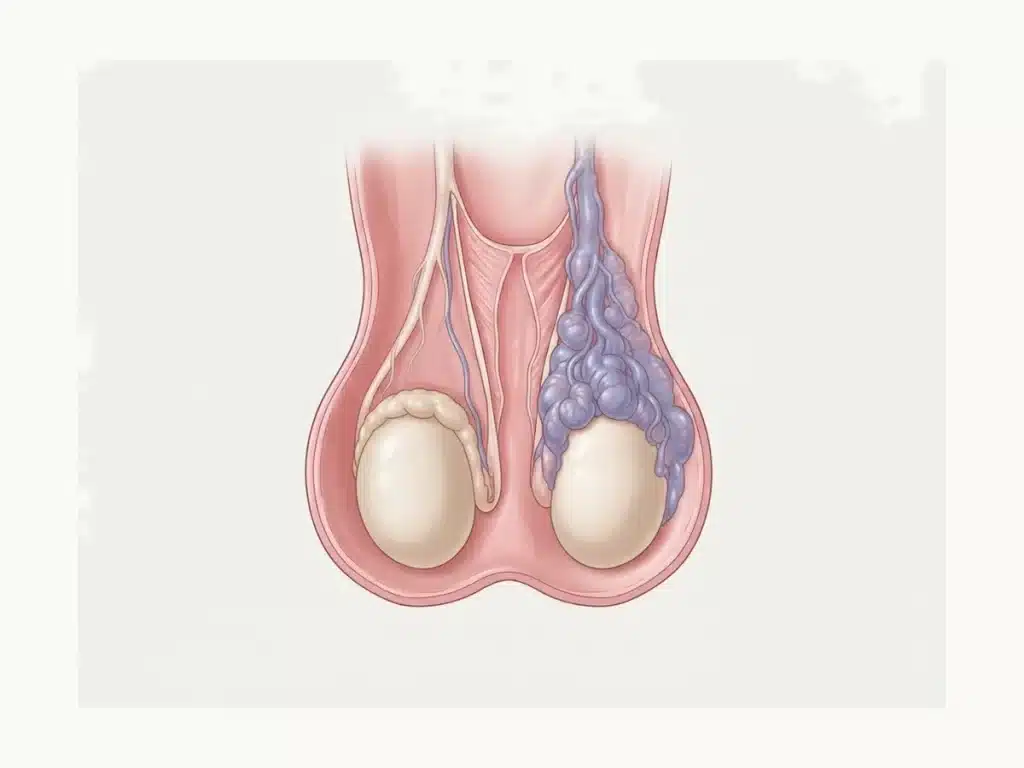
A varicocele is an enlargement of the veins around the testicle, similar to varicose veins in the leg. Varicoceles are common, and many do not need treatment. Treatment is usually considered when a varicocele causes pain, changes in the testicle, or fertility concerns.
If treatment is recommended, the two established approaches are surgical repair and varicocele embolisation. They work differently, and the right choice depends on your age, fertility goals and personal preference.
Symptoms that may lead to assessment
- a dull ache or heaviness in the scrotum, especially after standing
- visible or noticeable swelling around the testicle
- a testicle that appears smaller than the other side
- difficulty conceiving, leading to a fertility assessment
A varicocele forms when valves inside the veins do not work properly, allowing blood to pool and the veins to enlarge over time.
How surgical repair works
Surgical repair (varicocelectomy) involves identifying the abnormal veins and tying them off so blood can no longer pool there. It is performed through a small incision, usually under general anaesthetic, depending on the technique used.
How varicocele embolisation works
Embolisation treats the affected veins from inside the blood vessel. An interventional radiologist guides a thin catheter into the vein through a small puncture and places tiny coils or another blocking material to close it off. It does not involve an incision in the scrotum.
Embolisation is typically performed with local anaesthetic and light sedation. The procedure generally takes about an hour, and most patients go home the same day.
Recovery
Recovery time is one of the main reasons some patients consider embolisation. Many people can return to desk work within one to two days, depending on the physical demands of their job. Heavy lifting should be avoided for about a week, and sexual activity should be paused for a period after treatment as advised by your doctor.
Recovery after surgery is often longer, as the body needs time to heal from the incision.
Can treatment help fertility?
Varicoceles are sometimes linked to reduced fertility. Treating a significant varicocele may improve semen quality in some men, but treatment does not guarantee pregnancy. Fertility depends on many factors involving both partners, so a fertility specialist may need to review semen testing alongside the wider picture.
Risks
Both treatments carry some risks. Embolisation can cause bruising or bleeding at the access site, discomfort, reactions to the contrast used during imaging and, rarely, movement of the blocking material. Surgery carries its own risks, including infection and a build-up of fluid around the testicle (hydrocele). With either approach, a varicocele can occasionally come back.
When should you see a doctor?
See a doctor if you notice ongoing scrotal pain, visible swelling or a change in testicle size, or if you and your partner are having difficulty conceiving. Seek urgent care for sudden, severe testicular pain, as this can indicate a different, urgent condition.
Next steps
Discuss your options with Dr Ryan McConnell
Dr McConnell can review your symptoms and ultrasound and discuss whether varicocele embolisation may be suitable.