
Image-guided spinal & pain procedures
Spinal and pain procedures
Image guidance can be used to precisely target structures that may be contributing to pain, including spinal nerves, facet joints and other areas around the spine.
Dr Ryan McConnell performs a range of image-guided spinal and pain procedures in Sydney, including nerve root and perineural injections, facet and medial branch procedures, radiofrequency ablation and vertebral augmentation.
The appropriate procedure depends on the suspected source of symptoms, previous imaging, clinical assessment and treatments already undertaken.
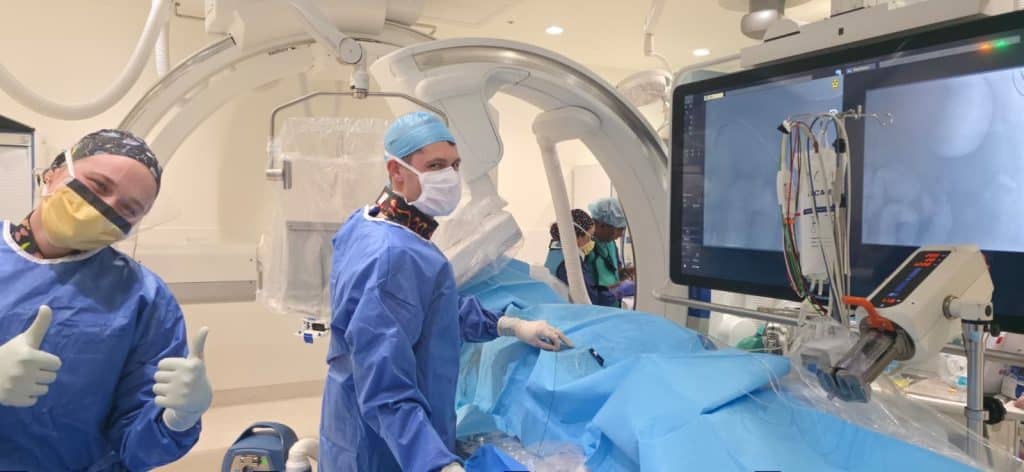
Procedures
Image-guided procedures
Image guidance allows needles and treatment devices to be positioned accurately in relation to the structure being assessed or treated.
The procedure recommended will depend on the clinical question and the likely source of symptoms.
Nerve root & perineural injections
Spinal nerve roots can become irritated or compressed by conditions affecting the spine.
An image-guided nerve root or perineural injection places medication around a selected nerve using imaging to guide needle position.
These procedures may be used to help manage symptoms or, in selected circumstances, provide information about whether a particular nerve is contributing to the patient's pain.
Facet joint & medial branch procedures
Facet joints are small joints located at the back of the spine. In some patients, these joints can contribute to neck or back pain.
Image-guided procedures may involve injection of a facet joint or targeting the small medial branch nerves that carry pain signals from the facet joints.
Diagnostic medial branch procedures may also help determine whether a patient could be considered for radiofrequency treatment.
Learn about facet joint injection →Radiofrequency ablation
Radiofrequency ablation uses a specialised needle to deliver controlled thermal energy to selected nerves involved in transmitting pain signals.
For spinal facet-related pain, radiofrequency treatment may be considered when assessment and diagnostic procedures indicate that the targeted medial branch nerves are likely to be contributing to symptoms.
The duration and degree of symptom improvement varies between patients.
Vertebral augmentation
Vertebral compression fractures can cause significant spinal pain, particularly in patients with osteoporosis or other conditions that weaken the vertebral body.
In selected patients with a symptomatic vertebral compression fracture, a minimally invasive vertebral augmentation procedure may be considered.
Treatment involves placing a needle into the affected vertebral body using imaging guidance and introducing bone cement to stabilise the fracture.
Suitability depends on the cause and age of the fracture, symptoms and imaging findings.
Learn about vertebroplasty →Selecting the right procedure
Identifying the source of pain
Back and neck pain can arise from many different structures, and abnormalities seen on imaging do not necessarily explain a patient's symptoms.
Before an image-guided procedure is considered, the clinical history and relevant imaging should be reviewed together.
Depending on the clinical situation, this may include assessment of:
- the location and pattern of symptoms
- CT or MRI findings
- previous spinal procedures or surgery
- previous injections and the response to treatment
- physiotherapy and other conservative treatment
- neurological symptoms
- relevant medical conditions and medications
Imaging findings need to be considered alongside the patient's symptoms and clinical assessment.
In some situations, an image-guided injection has both a therapeutic and diagnostic role, helping determine whether a particular structure is contributing to the patient's symptoms.
Not every imaging abnormality requires an intervention.
Precision with image guidance
How are spinal and pain procedures performed?
Depending on the procedure, CT, fluoroscopy or ultrasound guidance may be used to identify the target and guide needle placement.
After the area has been cleaned and prepared, local anaesthetic is usually used to numb the skin and deeper tissues.
A needle or treatment device is then positioned using imaging guidance. Depending on the procedure, medication may be injected, diagnostic testing performed or radiofrequency energy applied.
Some procedures can be performed with local anaesthetic alone, while sedation may be appropriate in selected circumstances.
The exact technique and preparation depend on the procedure being performed.
Your procedure
What to expect on the day
Preparation varies according to the procedure.
01
Clinical & imaging review
→
02
Image-guided procedure
→
03
Observation
→
04
Recovery
Before treatment, the clinical team will review your relevant medical history, imaging and medications. Particular attention may be required for anticoagulant or antiplatelet medications.
You will be positioned according to the area being treated and the type of imaging guidance required.
Local anaesthetic is generally used at the treatment site. The duration of the procedure and need for sedation vary depending on the intervention.
Following the procedure, you may be observed for a period before leaving the hospital or procedural facility. Some procedures require someone to accompany you home.
Specific preparation and aftercare instructions will be provided for your procedure.
Preparing for your procedure →After your procedure
Recovery and aftercare
Recovery varies considerably according to the procedure performed.
There may be temporary soreness or bruising around the treatment site. Some patients may also experience a temporary change in their usual symptoms following an injection or radiofrequency procedure.
Instructions will be provided regarding activity, wound or dressing care and when usual activities can be resumed.
The response to pain procedures varies between patients. Some treatments may provide symptom improvement, while others are performed partly to help determine the likely source of pain and guide further management.
Risks & considerations
What are the risks?
The risks depend on the procedure being performed, the area being treated and individual patient factors.
Procedures performed close to spinal nerves and other important structures have additional procedure-specific risks. These will be discussed before treatment according to the particular intervention being considered.
For vertebral augmentation, radiofrequency treatment and other specialised procedures, the risks and alternatives will be discussed individually before proceeding.
Potential risks may include:
- temporary discomfort or bruising at the treatment site
- bleeding
- infection
- temporary worsening or change in symptoms
- reaction to medication or contrast material
- failure to improve symptoms
For doctors & referrers
Referring for an image-guided spinal or pain procedure
Patients may be referred for a specific image-guided procedure or for assessment of whether an interventional procedure may be appropriate.
Where available, please include:
- the clinical indication and relevant symptoms
- relevant CT or MRI reports and imaging
- previous spinal surgery or interventions
- previous injections and response
- relevant medical history
- current medications, particularly anticoagulant or antiplatelet therapy
If the most appropriate procedure is uncertain, the referral can request an interventional radiology opinion rather than specifying a particular treatment.
Existing imaging can be reviewed as part of the assessment.

FAQs
Frequently asked questions
Do I need an MRI or CT before a spinal procedure?
What is a nerve root injection?
What is a medial branch block?
What is radiofrequency ablation?
How long does radiofrequency treatment last?
What is vertebral augmentation?
Will I need sedation?
Will an injection cure my back or neck pain?
Spinal & pain procedures
Discuss an image-guided procedure
If you have been referred for a spinal or pain procedure, or your treating doctor would like an interventional radiology opinion, Dr Ryan McConnell can review the clinical question and relevant imaging to determine whether an image-guided procedure may be appropriate.