
Pelvic vein embolisation
Pelvic vein embolisation is a minimally invasive procedure used to treat pelvic veins in which blood flows backwards. These veins may contribute to ongoing pelvic pain or varicose veins around the vulva or upper thighs. An interventional radiologist guides a thin catheter through a small puncture in a vein and closes the abnormal veins using coils or a liquid embolisation material. It is usually performed as a day procedure, without an abdominal or pelvic surgical incision. Dr Ryan McConnell assesses your symptoms and imaging to determine whether pelvic veins may be contributing to your symptoms and whether embolisation is appropriate. Book a consultation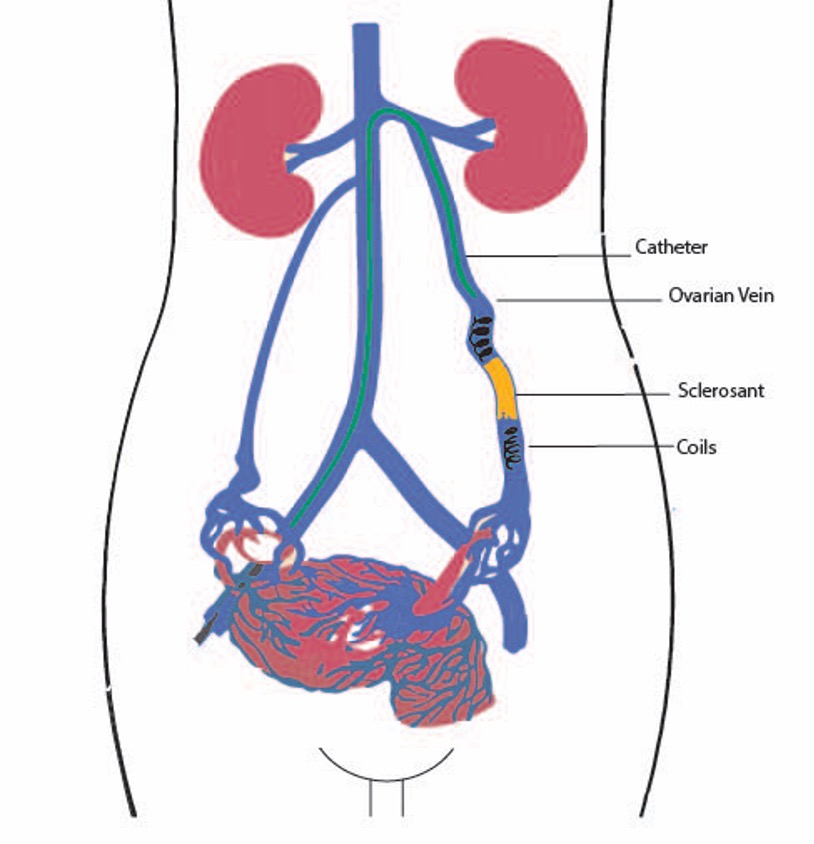
Who may be suitable for pelvic vein embolisation?
Pelvic vein embolisation may be considered when persistent pelvic pain, pressure or vulval varicose veins are associated with backward blood flow through the ovarian or other pelvic veins. Symptoms and scan findings are assessed together. Dr McConnell will review your history, imaging and other possible causes of pelvic pain. He will also consider whether narrowing of a larger vein is affecting pelvic drainage, as that may change the treatment approach. An enlarged pelvic vein on a scan alone does not mean that embolisation is needed. Learn about pelvic congestion syndrome →
Preparing for pelvic vein embolisation
Before the procedure, tell Dr McConnell’s team about your medications, allergies, kidney problems and any possibility of pregnancy.
Bring any relevant scans to your consultation if they have not already been provided.You may need blood tests to check your kidney function and how your blood clots.You will receive instructions about when to stop eating and drinking and which medications to take on the day.Do not stop blood thinners or other prescribed medicines unless your treating team tells you to.If sedation is planned, the team will also explain your arrangements for getting home.
How is pelvic vein embolisation performed?
01
The procedure is performed with local anaesthetic at the catheter entry site. Sedation may also be offered to help you relax. Dr McConnell accesses a vein through a small puncture in the neck, groin or arm, depending on the veins being treated.
02
Using live X-ray guidance, he advances a thin catheter into the pelvic veins. Contrast dye is injected to show the direction of blood flow and identify the veins that need treatment. This imaging test is called a venogram.
03
Coils, a liquid embolisation agent or another suitable material are then delivered through the catheter to close the refluxing veins. Further images may be taken to check the result. The catheter is removed and a small dressing is placed over the puncture site.
Potential benefits of pelvic vein embolisation
Pelvic vein embolisation treats problematic veins through a small puncture, without an abdominal or pelvic surgical incision. It is commonly performed as a day procedure. For suitable patients, treating refluxing pelvic veins may reduce pelvic pain and pressure. It may also address a source of varicose veins around the vulva or upper thighs. Visible surface veins may still need separate assessment or treatment. The degree of symptom improvement varies. Dr McConnell will discuss what the findings suggest for your circumstances.
Risks and complications of pelvic vein embolisation
Pelvic aching or a temporary increase in pain during the first week can occur as treated veins become inflamed. You may also have bruising around the catheter entry site. These effects usually settle with time and appropriate pain relief. Less common risks include bleeding, infection, a reaction to contrast dye, a blood clot or movement of embolisation material. The procedure also uses X-rays. Serious complications are uncommon, and Dr McConnell will discuss risks that apply to your health and planned treatment. Embolisation may not be technically possible in every vein, and symptom relief cannot be guaranteed. Other abnormal veins can develop over time and symptoms may return.
Recovery after pelvic vein embolisation
01
Most patients go home the same day after a period of observation. You may have mild bruising where the catheter was inserted and pelvic aching or cramping for several days. Symptoms can temporarily feel worse during the first week.
02
Plan to rest at first and avoid heavy lifting and strenuous exercise for about a week, or as advised in your discharge instructions. When you return to work will depend on how you feel and the demands of your job.
03
Improvement in pelvic symptoms can take several weeks; the full response is often assessed after one to three months. Dr McConnell’s team will give you individual advice about pain relief, driving, activity and follow-up.
Discuss pelvic vein embolisation with Dr Ryan McConnell
If you have ongoing pelvic pain, pressure or vulval varicose veins, an assessment can help determine whether pelvic veins are contributing to your symptoms. Dr McConnell will review your history and imaging, explain whether embolisation may be suitable, and discuss your treatment options. Book a consultation at Dr McConnell’s Manly or St Leonards rooms, or ask your doctor to refer you. Book a consultation

Frequently asked questions about pelvic vein embolisation
Is pelvic vein embolisation painful?
The catheter entry site is numbed with local anaesthetic, and sedation may be used. You may feel pressure during the procedure. Pelvic aching or cramping afterwards is more common and can temporarily increase during the first week; your team will discuss pain relief with you.
How long does recovery take?
Most patients go home the same day. Avoid heavy lifting and vigorous exercise for about a week, following your individual discharge instructions. It can take one to three months to assess the full effect on symptoms.
What are the possible complications?
Temporary pelvic discomfort and bruising are the more common effects. Less common risks include bleeding, infection, a reaction to contrast and movement of embolisation material. Dr McConnell will discuss the risks relevant to your health and planned treatment.
Can symptoms return after pelvic vein embolisation?
Symptoms can return if other abnormal veins develop over time. If pain persists or returns, a further assessment can help determine whether pelvic veins or another cause are involved.
How much does pelvic vein embolisation cost?
The cost depends on your treatment plan and where the procedure is performed. Following your assessment, the practice can provide an estimate of the expected fees and any out-of-pocket costs. You can then check any applicable cover with your health insurer.