
Image-guided cancer treatment
Interventional oncology
Interventional oncology uses minimally invasive, image-guided procedures to diagnose and treat selected cancers and complications of cancer.
Dr Ryan McConnell performs interventional oncology procedures including percutaneous tumour ablation and transarterial chemoembolisation (TACE).
These treatments are considered as part of a patient's broader cancer care, with treatment decisions based on the type and location of the tumour, imaging findings, previous treatment and overall clinical circumstances.
Multidisciplinary cancer care
Where does interventional oncology fit in cancer treatment?
Cancer treatment may involve a combination of surgery, medical oncology, radiation oncology and image-guided treatment.
Interventional oncology provides techniques that can target selected tumours through small skin punctures or through the blood vessels supplying a tumour.
Depending on the cancer and individual circumstances, an interventional oncology procedure may be considered:
- as a local treatment for a selected tumour
- alongside other cancer treatments
- when surgery is not appropriate
- to control selected sites of disease
- to help manage symptoms or complications associated with cancer
Whether an interventional procedure is appropriate depends on the individual clinical situation and should be considered alongside the other available treatment options.
Image-guided treatments
Interventional oncology procedures
The appropriate treatment depends on factors including tumour type, size and location, the extent of disease and other treatments being considered.
Tumour ablation
Tumour ablation involves placing one or more specialised needles directly into a tumour using imaging guidance.
Energy is then delivered through the treatment device to destroy the targeted tumour tissue. Different ablation technologies may be used depending on the tumour and clinical circumstances.
Ablation may be considered for selected tumours in organs such as the liver, kidney and lung, as well as selected bone and soft-tissue lesions.
Suitability depends on factors including the number, size and location of tumours, surrounding structures and the patient's overall treatment plan.
Transarterial chemoembolisation (TACE)
TACE is a catheter-based treatment most commonly used for selected tumours within the liver.
A small catheter is guided through the arteries to identify the vessels supplying the tumour. Treatment is then delivered directly into the tumour's arterial supply, combining locally delivered chemotherapy with embolisation of the tumour blood vessels.
TACE may be considered for selected patients with primary or secondary liver tumours depending on the tumour type, extent of disease, liver function and overall treatment strategy.
Other image-guided oncology procedures
Interventional radiology can also contribute to cancer care through other image-guided procedures, including selected biopsies, drainage procedures and interventions used to manage complications associated with cancer or its treatment.
The role of these procedures depends on the individual clinical situation and the patient's broader oncology care.
Percutaneous treatment
How does tumour ablation work?
Tumour ablation allows selected tumours to be treated directly using imaging guidance.
CT, ultrasound or other imaging is used to identify the tumour and guide the treatment device into position.
Depending on the procedure, energy is delivered through the device to create a controlled treatment zone encompassing the targeted tumour.
Imaging is used throughout the procedure to plan treatment, guide device placement and assess the treatment area.
Ablation is not appropriate for every tumour. Tumour size and location, proximity to surrounding structures and the overall cancer treatment strategy are important considerations when determining suitability.
Catheter-directed treatment
How does TACE work?
Transarterial chemoembolisation treats selected liver tumours through their arterial blood supply.
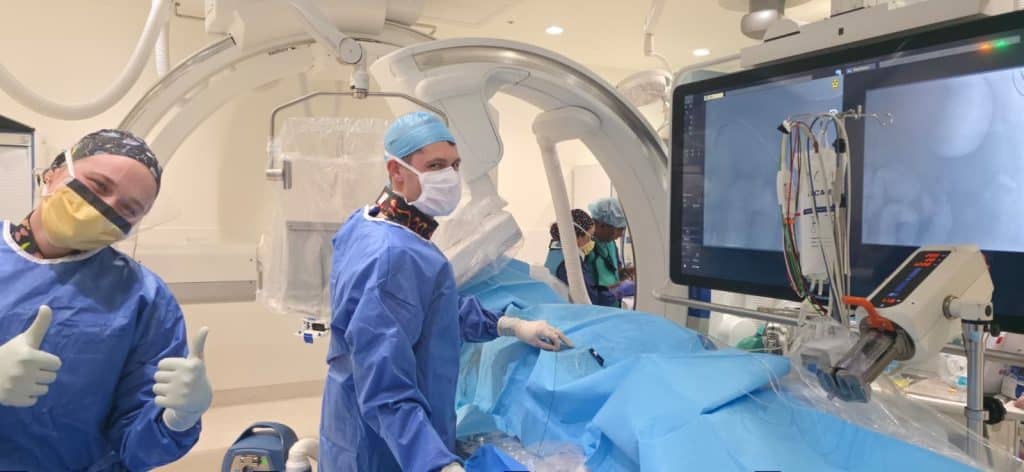
Through a small arterial puncture, a catheter is guided under X-ray imaging into the arteries supplying the liver and then towards the vessels supplying the tumour.
Treatment is delivered selectively into the tumour's arterial supply.
The aim is to concentrate treatment within the tumour while limiting exposure to surrounding tissues.
TACE is one component of liver cancer treatment and is not suitable for every patient. Treatment planning takes into account the type and distribution of tumour, liver function, vascular anatomy and other available cancer treatments.
Individual treatment planning
Is an interventional oncology procedure appropriate for me?
There is no single interventional oncology treatment that is appropriate for every cancer or every patient.
Assessment may take into account:
- the type of cancer
- tumour size, number and location
- whether disease is confined to one area or present elsewhere
- previous surgery, chemotherapy, immunotherapy or radiation therapy
- liver, kidney and other organ function
- relevant CT, MRI or PET imaging
- other treatment options
- the patient's general health and treatment goals
Interventional oncology is one component of multidisciplinary cancer care.
Existing imaging and oncology information can be reviewed to determine whether an image-guided procedure may have a role.
When appropriate, treatment planning occurs alongside the patient's other treating specialists.
Your procedure
What to expect from an image-guided oncology procedure
Preparation and recovery depend on the procedure being performed.
01
Imaging & clinical review
→
02
Treatment planning
→
03
Image-guided procedure
→
04
Recovery & follow-up
Before treatment, relevant imaging, medical history, medications and blood tests will be reviewed. Additional imaging or investigation may occasionally be required before treatment planning is finalised.
Procedures are performed using imaging guidance such as CT, ultrasound or X-ray angiography.
Depending on the treatment, local anaesthetic, sedation or general anaesthesia may be used.
After the procedure, patients are monitored for an appropriate period. Some treatments can be performed as day procedures, while others may require an overnight or longer hospital stay.
Specific preparation and recovery instructions will be provided according to the planned procedure.
Preparing for your procedure →After treatment
Follow-up after interventional oncology treatment
Follow-up depends on the cancer and procedure performed.
After tumour-directed treatment, imaging such as CT or MRI may be used to assess the treated area and determine whether further treatment or surveillance is required.
Blood tests and clinical follow-up may also form part of the assessment.
Interventional oncology treatment does not replace the need for ongoing cancer care. Patients will generally continue follow-up with their relevant oncology, surgical or other treating specialists as appropriate.

Risks & considerations
What are the risks?
The risks of interventional oncology treatment depend on the procedure, tumour location and individual clinical circumstances.
Tumour ablation and catheter-directed treatments such as TACE also have specific risks related to the organ being treated and the technique used.
These risks, expected benefits, limitations and alternative treatment options will be discussed before proceeding with a particular procedure.
Potential risks of image-guided tumour treatments may include:
- pain or discomfort following treatment
- bleeding
- infection
- injury to nearby structures
- reaction to medication or contrast
- incomplete treatment of the targeted tumour
- need for further treatment
For doctors & referrers
Referring for an interventional oncology opinion
Patients can be referred for consideration of a specific image-guided oncology procedure or for an opinion regarding whether interventional treatment may have a role.
Where available, please include:
- cancer diagnosis and relevant histopathology
- current oncology treatment and previous treatments
- relevant CT, MRI or PET imaging
- recent blood tests
- relevant medical history
- current medications
- the clinical question or reason for referral
If the appropriate interventional procedure is uncertain, the referral does not need to specify a particular treatment.
Relevant imaging and clinical information can be reviewed to determine whether further assessment or discussion with the treating oncology team is appropriate.
FAQs
Frequently asked questions about interventional oncology
What is interventional oncology?
Does interventional oncology replace chemotherapy or surgery?
What is tumour ablation?
Which cancers can be treated with ablation?
What is TACE?
Will I need a general anaesthetic?
How long will I stay in hospital?
How will we know whether the treatment has worked?
Interventional oncology
Discuss an image-guided cancer treatment
If an image-guided treatment is being considered as part of your cancer care, Dr Ryan McConnell can review the relevant imaging and clinical information and discuss whether an interventional oncology procedure may have a role.