
Vascular conditions
Renal artery stenosis
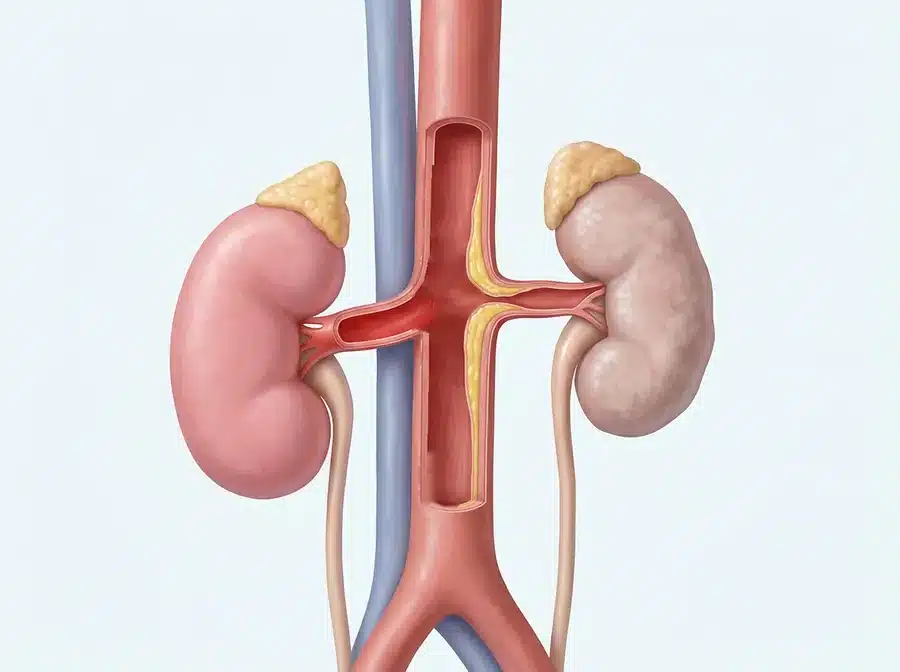
Renal artery stenosis is narrowing of one or both of the arteries that supply blood to the kidneys.
Many people with renal artery stenosis have no symptoms and do not need a procedure, but in selected patients significant narrowing may contribute to high blood pressure that is difficult to control or to a decline in kidney function.
Dr Ryan McConnell assesses and treats selected patients with renal artery stenosis in Sydney, working with referring GPs, nephrologists and cardiologists.
Causes
What causes renal artery stenosis?
There are two main causes of renal artery stenosis. It can affect one kidney or both (bilateral renal artery stenosis).
Atherosclerosis
Build-up of fatty plaque in the artery wall. This is the most common cause, particularly in older adults and in people with other vascular disease, diabetes, high cholesterol or a history of smoking.
Fibromuscular dysplasia (FMD)
A less common condition affecting the structure of the artery wall, seen more often in younger adults, particularly women.
Symptoms
What are the symptoms of renal artery stenosis?
Renal artery stenosis often causes no symptoms of its own and may be found on imaging performed for another reason.
Features that can prompt assessment include:
- high blood pressure that is severe, difficult to control despite several medications, or starts at a young age
- a decline in kidney function, including a significant change after starting certain blood pressure medications
- sudden episodes of fluid on the lungs (flash pulmonary oedema) without another clear cause
- a difference in kidney size on imaging
Many people with renal artery stenosis have no symptoms and are managed with medication and monitoring.
Diagnosis
How is renal artery stenosis diagnosed?
Assessment usually involves reviewing your blood pressure, kidney function, medications and imaging. Tests may include:
- Doppler ultrasound of the renal arteries
- CT angiography or MR angiography
- catheter angiography, which may be performed when treatment is being considered
The key question is not only whether a narrowing is present, but whether it is significant and likely to be contributing to your blood pressure or kidney function.
Suggested image
Anonymised CT angiogram showing narrowing of a renal artery, with the narrowed segment marked.
Treatment
How is renal artery stenosis treated?
Medical management
For most people with atherosclerotic renal artery stenosis, treatment focuses on medical management, usually coordinated by the GP, nephrologist or cardiologist. This may include blood pressure control, cholesterol-lowering medication, antiplatelet therapy, management of diabetes and stopping smoking.
Large studies have shown that, for many patients with atherosclerotic renal artery stenosis, routine stenting does not add significant benefit to good medical treatment. Careful patient selection is therefore important.
Angioplasty and stenting
In selected patients, renal artery angioplasty — with or without placement of a stent — may be considered. Situations where intervention may be discussed include:
- fibromuscular dysplasia, where angioplasty is often the preferred treatment when intervention is required
- high blood pressure that remains difficult to control despite optimal medication
- declining kidney function thought to be related to the narrowing
- recurrent flash pulmonary oedema
Procedure & risks
Risks of renal artery angioplasty and stenting
The procedure is performed through a small catheter inserted into an artery, typically in the groin (femoral artery). Sometimes the wrist (radial artery) is used instead, depending on the anatomy and angle of the renal arteries. Using X-ray guidance, a balloon is used to widen the narrowed segment, and a stent may be placed to hold it open. Hospital arrangements depend on the procedure and individual circumstances.
Potential risks include bleeding or bruising at the access site, injury to the artery, reaction to contrast, worsening of kidney function, and re-narrowing of the artery over time.
Your individual risks will be discussed before any procedure.
Vascular & endovascular treatments →
FAQs
Frequently asked questions about renal artery stenosis
What is renal artery stenosis?
Is renal artery stenosis serious?
What is the life expectancy with renal artery stenosis?
Can renal artery stenosis be reversed?
Can I take ACE inhibitors or ARBs with renal artery stenosis?
Do I need a referral?
For doctors & referrers
Referring a patient with renal artery stenosis
GPs, nephrologists and cardiologists are welcome to refer patients with known or suspected renal artery stenosis. Dr McConnell can review the imaging and clinical information to help determine whether an endovascular procedure may be appropriate, and will work alongside the referring team on ongoing medical management.