
Article · Varicocele
Can a varicocele be cured?
A varicocele rarely disappears by itself, but it does not always need treatment. When it does, there is more than one way to treat it, including a procedure that closes the faulty vein from the inside through a small puncture.
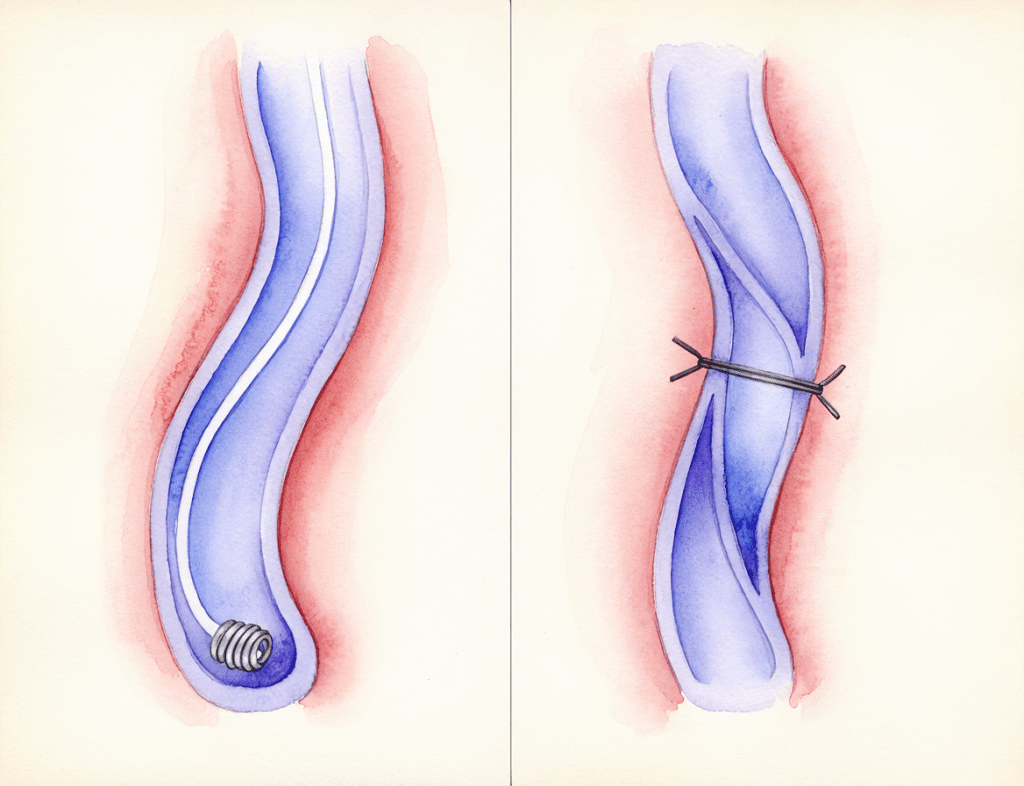
The short answer: lifestyle measures and pain relief can make a varicocele more comfortable, but they do not fix the underlying vein problem. The treatments that correct it are surgical repair and a non-surgical procedure called embolisation. Many men never need either. For an overview of symptoms and how a varicocele is diagnosed, see our varicocele page.
Does a varicocele go away on its own?
In adults, a varicocele almost never goes away on its own. It is caused by valves in the testicular vein that do not close properly, and those valves do not repair themselves. A varicocele can, however, stay stable for many years without causing trouble. A small varicocele that causes no pain and no fertility concerns often needs nothing more than occasional review.
Symptoms can also come and go, which sometimes gives the impression that a varicocele has improved. The ache often settles overnight and returns after a day on your feet.
What happens if a varicocele is left untreated?
Many varicoceles cause no harm if left alone. In some men, a larger varicocele may over time:- cause an ongoing dull ache or heaviness, often worse after standing or exercise
- be associated with the affected testicle becoming smaller
- affect sperm count, movement or shape, which may matter if you are trying to conceive
- be associated with lower testosterone levels, although the evidence for this is mixed
Managing symptoms without treatment
If your varicocele is mild, these measures can make it more comfortable:- supportive underwear or an athletic support
- breaks from long periods of standing
- simple pain relief, if it is suitable for you
- a cold pack wrapped in a cloth after activity
These measures ease symptoms but do not close the faulty vein, so they are not a cure. There is no medication or supplement that reverses a varicocele.
Is there a non-surgical treatment?
Yes. Embolisation treats a varicocele without an operation. An interventional radiologist passes a thin catheter into the vein through a small puncture, usually in the groin or neck, and closes the faulty vein from the inside with tiny coils or another blocking material. There is no incision in the scrotum or abdomen, and most people go home the same day.
How the procedure is performed, who may be suitable, recovery and risks are explained on our varicocele embolisation page. If you are weighing up the options, our article on embolisation compared with surgery sets out the differences.
Is treatment a permanent cure?
Both embolisation and surgical repair aim to treat the varicocele permanently, and most men do not need further treatment. With either approach, a varicocele can occasionally come back, usually because a small vein was not closed or another vein enlarges over time. A recurrence can usually be treated again.
When is treatment worth considering?
Treatment is usually worth discussing if you have ongoing pain or heaviness that affects daily life, a testicle that is becoming smaller, or a varicocele together with an abnormal semen analysis when you are trying to conceive. If your varicocele is small and not causing problems, leaving it alone is a reasonable choice.
When should you see a doctor?
See your GP if you notice a new lump or swelling in the scrotum, so other causes can be ruled out. A varicocele that appears suddenly in an adult, or only on the right side, should also be checked promptly. Seek urgent care for sudden, severe testicular pain, as this can indicate a different, urgent condition.
Next steps
Discuss your options with Dr Ryan McConnell
If you have a varicocele and want to know whether it needs treatment and which option may suit you, Dr McConnell can review your symptoms and ultrasound and explain your options.